Los Sueños Fishing Guide: Seasonal Calendar & Charters
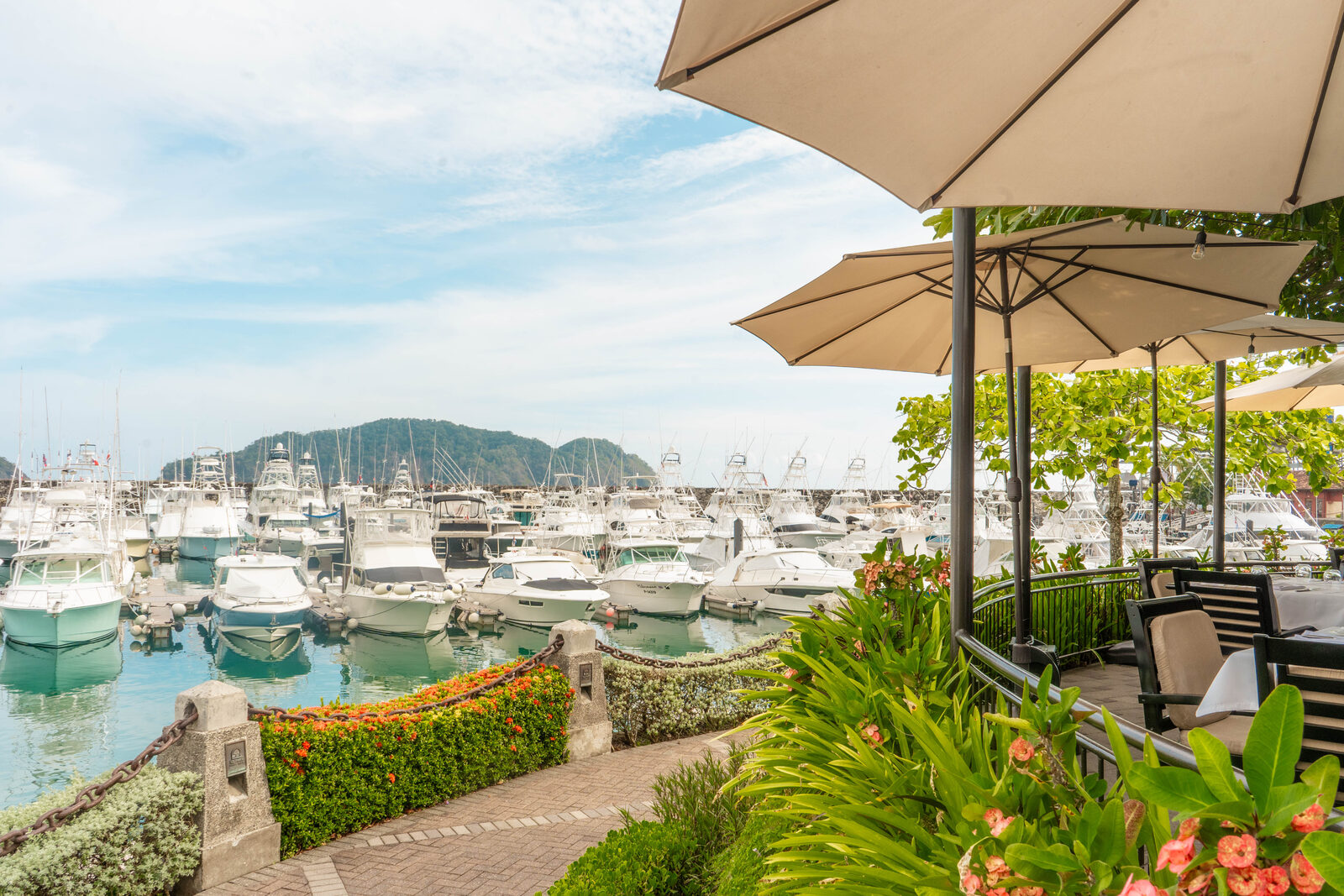
Los Sueños fishing begins at one of the best natural advantages in Pacific sportfishing: geography. The Los Sueños Marina sits on Costa Rica’s Central Pacific coast in Playa Herradura, about 90 minutes from San José’s international airport. The continental shelf drops off steeply here: deep blue water starts just 20 to 30 minutes from the marina mouth. Billfish don’t require a three-hour run offshore. You’re into 1,000-foot depths before you’ve finished your first cup of coffee.
The marina has hosted competitive billfish tournaments since 2004. The annual Signature Triple Crown, three legs of three fishing days each, typically running January through March, regularly draws 40-plus boats and some of the best crews in the Pacific. During tournament weeks, the fleet commonly releases over 1,000 billfish combined across three days. Those aren’t marketing numbers. They’re posted on the official scoreboard.
That kind of fishery, paired with a full-service marina and a resort community built around it, is why Los Sueños fishing draws serious anglers from across the Americas, and increasingly, first-timers who want to see what the fuss is about. You don’t need to be a tournament angler to benefit from it: the same boats, captains, and mates who compete in the Triple Crown take paying guests the rest of the year.
What You Can Catch (and When)
Los Sueños produces fish year-round, but what you’re targeting shifts with the seasons. Here’s the honest breakdown:
Billfish Season: December through April
This is peak season. Pacific sailfish show up in big numbers starting in December, and the action holds through April, with February widely considered the best single month. During the Triple Crown tournaments (January through March), boats regularly release 15 to 30-plus billfish per day. Blue marlin are around in these months too, and striped marlin appear, though less predictably. A grand slam (sailfish, blue marlin, and striped marlin in one day) is a realistic goal in March.
If your trip is built around a marlin or sailfish bucket-list moment, book during this window.
Green Season: May through November
The rains come, tourist crowds thin out, and the fishing actually stays strong: it just shifts. Sailfish are still around, especially early and late in the season. Blue marlin build from May and peak June through October, with July and August typically the best months for the big fish. Black marlin follow a slightly later pattern, strongest August through October. The real crowd-pleaser from June through October is dorado (mahi-mahi). Schools of dorado stack up under floating debris lines, and it’s some of the most exciting light-tackle fishing you’ll find anywhere. Yellowfin tuna also peak during these months, with fish running 40 to 150-plus pounds.
Inshore: Year-Round (Best December through April)
Roosterfish (the one everyone wants a photo with) are catchable year-round along the rocky shorelines near Herradura and Jacó. Dry season (December through April) tends to produce more consistent inshore action. Cubera snapper, jack crevalle, and amberjack round out the inshore roster.
Seasonal Calendar
| Month | Sailfish | Marlin | Dorado | Yellowfin Tuna | Roosterfish | Snapper |
|---|---|---|---|---|---|---|
| Jan | ★★★★★ | ★★★★ | ★★ | ★★★ | ★★★★ | ★★★ |
| Feb | ★★★★★ | ★★★★ | ★★ | ★★★ | ★★★★ | ★★★ |
| Mar | ★★★★★ | ★★★★★ | ★★ | ★★★ | ★★★★ | ★★★ |
| Apr | ★★★★ | ★★★★ | ★★★ | ★★★ | ★★★★ | ★★★ |
| May | ★★★ | ★★★ | ★★★★ | ★★★★ | ★★★ | ★★★ |
| Jun | ★★★ | ★★★★ | ★★★★★ | ★★★★★ | ★★★ | ★★★★ |
| Jul | ★★★ | ★★★★★ | ★★★★★ | ★★★★★ | ★★★ | ★★★★ |
| Aug | ★★★ | ★★★★★ | ★★★★★ | ★★★★★ | ★★★ | ★★★★ |
| Sep | ★★★ | ★★★★ | ★★★★★ | ★★★★ | ★★★ | ★★★★ |
| Oct | ★★★ | ★★★★ | ★★★★ | ★★★★ | ★★★ | ★★★ |
| Nov | ★★★★ | ★★★ | ★★★ | ★★★ | ★★★★ | ★★★ |
| Dec | ★★★★★ | ★★★★ | ★★ | ★★★ | ★★★★ | ★★★ |
The short version: there’s no wrong month to fish Los Sueños. There’s just a different kind of good. For a full month-by-month breakdown with booking lead times, see our Los Sueños fishing season calendar.
Species at a Glance
The Central Pacific produces a wide range of game fish. These are the ones most people come for:
Pacific sailfish are the main attraction. Lean, fast, and spectacularly acrobatic, they’re caught in large numbers from December through April. A typical sailfish runs 60 to 100-plus pounds. The initial run is explosive: they tail-walk across the surface and greyhound repeatedly before you get them to the boat. Strictly catch and release by Costa Rica law.
Blue marlin show up in peak numbers from June through October. These are brute-force fish, commonly 200 to 400 pounds, that sound deep and pull with sustained, grinding power. A blue marlin fight on heavy tackle can last an hour or more. Also catch and release only.
Dorado (mahi-mahi) are the crowd-pleaser. Electric blue and gold, aggressive biters, acrobatic fighters, and excellent on the table. They gather around floating debris and weed lines, which makes them relatively easy to locate when they’re in season. June through October is prime, with good action into November and December. You can keep dorado for dinner.
Yellowfin tuna are abundant from May through September, with fish in the 20 to 150-plus pound range. Often found with floating debris, sea birds, and dolphin schools. Hard-fighting, great on the table, and a reliable offshore target when the billfish aren’t showing.
Roosterfish are the go-to inshore species. Named for the comb-like dorsal fin that fans up like a rooster’s crest, they patrol the surf zone and nearshore structure at 10 to 80 pounds. Found year-round along the Herradura and Jacó coastline, with December through April the most consistent. Legal to keep, but nearly every captain releases them.
Wahoo, cubera snapper, jack crevalle, amberjack, snook, and Spanish mackerel fill out the roster. Wahoo turn up offshore in the green season and around November; the rest are inshore fish that keep half-day trips busy.
For identification tips, tackle, and seasonal timing on every species, see our full Costa Rica fish species guide.
Types of Fishing Trips
There are two main ways to fish the Central Pacific, plus a couple of variations worth knowing.
Inshore charters keep you within a few miles of the coast, working rocky points, surf lines, reef structure, and estuaries for roosterfish, cubera snapper, jack crevalle, amberjack, and Spanish mackerel. The water is calmer, the runs are short, and the action tends to be constant. Half-day trips run 4 to 5 hours and are ideal for families with children, first-time saltwater anglers, or anyone unsure about seasickness.
Offshore charters run 20 to 40 miles out into deep blue water for sailfish, blue and black marlin, yellowfin tuna, dorado, and wahoo. Full-day trips are 8 to 10 hours. This is the trip for anglers who have come specifically to target billfish or land a trophy tuna. The crews are professional, the tackle is heavy, and the fish are big.
Three-quarter day trips (about 6 hours) are a middle option some boats offer. They can reach the offshore grounds when the fish are inside 20 miles, which is often the case in the green season. Ask the captain whether offshore is realistic before you book one.
Fly fishing is possible in the region but is less structured as a charter product. Roosterfish and snook in the estuaries and along the beaches are the local targets, and it requires advance arrangement with a specialist guide. Ask our team for a recommendation when you book.
The Marina
Los Sueños Marina was the first government-approved marina in Costa Rica. It has 200 wet slips accommodating boats from 30 feet up to 180 feet, plus over 100 dry storage slips for smaller vessels. It’s a proper, full-service operation: fuel dock, maintenance, harbor master, customs and immigration for international arrivals.
The charter fleet ranges from 27-foot center consoles up to 52-foot sportfishing yachts. You’ll see names like Cabo, Viking, Hatteras, and custom Maverick builds lining the docks. Many of these boats are owner-operated and tournament-proven; the same crews that compete in the Triple Crown take paying clients the rest of the year.
Walking the docks in the late afternoon during peak season is its own experience. Boats coming in with flags flying: blue for marlin release, red for sailfish. Crews hosing down cockpits, mates filleting dorado on the cleaning tables while pelicans crowd in. The tournament weigh station sits at the end of the main dock, and even on non-tournament days there’s an energy to the place. People gather with beers to watch the boats come in and hear the day’s reports.
The Signature Triple Crown tournament series, typically three legs in January, February, and March, is the marquee event. It’s been running since 2004 and has grown into one of the most competitive billfish tournaments in the Pacific. There’s also a Ladies Only tournament. During tournament weeks, the Marina Village fills up with teams, sponsors, and spectators. If your trip happens to overlap, you’ll get a front-row seat to competitive sportfishing at its highest level.
What a Charter Day Looks Like
Most offshore charters leave the dock between 6:30 and 7:00 AM. A full-day trip runs about 9 hours; half-days run 4 to 5 hours. Some boats offer three-quarter day options around 6 hours.
Here’s what a typical full-day offshore trip includes:
Gear and tackle: All provided. Rods, reels, lures, live bait, the boat handles everything. Most boats run Penn or Shimano reels with 30- to 80-pound setups. You don’t need to bring any fishing equipment.
Food and drinks: Full-day charters include lunch (usually fresh ceviche or sandwiches prepared onboard), plus water, sodas, and beer. Some of the larger boats have a full galley.
Crew: A captain and one or two mates. The mate handles bait rigging, hook sets, gaff work, and will coach you through the fight if you’re new to it.
Group size: Most boats take 4 to 8 anglers depending on the vessel. A 35-foot Cabo comfortably fishes 6; a 50-foot Maverick handles 8.
Pricing
Charter pricing in Los Sueños depends heavily on boat size and where you launch. As of 2026, expect roughly $800 to $1,200 for a half-day on a 28 to 32 foot boat, $1,400 to $1,600 for a full day on the same size, $2,700 to $3,300 for a full day on a 33 to 42 foot sportfisher, and $3,300 to $4,500 on a 43 to 52 foot luxury vessel. Beach departures from Herradura start lower, around $650 for a half day. All of that is per boat, not per person, and excludes 13% tax and a 15 to 20 percent crew tip. Splitting a $2,400 full-day charter among 6 people works out to $400 each before tax and tip.
For verified operator rates, a per-person cost breakdown, and every extra cost to budget for, see our Los Sueños fishing charter prices guide.
What to Bring
- Sunscreen (reef-safe preferred)
- Polarized sunglasses
- A hat
- Light, moisture-wicking clothing
- A long-sleeve sun shirt: you will burn
- A lightweight rain jacket if you’re fishing in green season
- Cash for tips
- A camera or phone with a waterproof case
Leave the jeans, the cotton t-shirts, and the heavy shoes at home. Deck shoes or sandals with grip are fine.
On seasickness: the Pacific off this coast is calmer than most offshore fisheries, but the 20 to 40 mile runs can still produce roll and pitch, especially in the afternoon or during green season. Take Dramamine or Bonine the night before and again an hour before departure, not on the boat when it’s already too late. Some anglers swear by ginger gum or wrist pressure bands. If you’re genuinely prone to it, a half-day inshore trip is a smarter first choice than a full day offshore. And once the fishing starts, your mate will keep you focused on the rod, which is the best cure there is.
Catch and Release: The Law and the Culture
Costa Rica has some of the strongest catch-and-release protections in the Americas, and it’s the reason you’ll see release flags flying on boats coming back to the dock, trip after trip.
Billfish are strictly catch and release. All sailfish, marlin, and swordfish must be released alive and cannot be removed from the water. This has been the law since 2008, enforced under INCOPESCA Board Agreement 476, and it applies to every angler on every boat, no exceptions. You’re not keeping a marlin at Los Sueños, and no serious captain would expect you to ask. Photos are taken boat-side with the fish in the water, then the mate revives it and lets it go.
It’s culture as much as regulation. The fleet takes conservation seriously. Tag-and-release programs run out of this marina have contributed decades of real data to Pacific billfish research, and tournament scoring is built entirely around releases.
Non-billfish species are fair game. Dorado, yellowfin tuna, wahoo, and snapper can be kept in reasonable quantities for personal consumption. Your mate will fillet your catch at the dock, some boats will vacuum-seal it, and several marina restaurants will cook it for you. Roosterfish are legal to keep, but nearly all operators release them voluntarily because they’re a prized inshore gamefish worth far more alive than on a plate.
The bigger picture. In 2022, Costa Rica pushed foreign industrial purse seine fleets at least 80 nautical miles offshore, sharply reducing bycatch of billfish and dorado in nearshore waters. The combination of mandatory billfish release, voluntary conservation culture, and industrial fleet restrictions is a major reason the Central Pacific fishery stays productive year after year. The fishing you experience today is the result of decades of responsible management.
Booking Tips
Peak season charters (December through April) book up. The best captains and boats fill their calendars 2 to 3 months ahead, especially around tournament weeks and holidays. If you’re coming during Christmas, New Year’s, or any Triple Crown leg, book your charter before you book your flights.
A few things that make a difference:
Go with a recommended captain. The gap between an average charter and a great one is enormous. A good captain knows where the fish have been staging, reads water temperature and current breaks, and puts you on fish instead of just trolling patterns. Ask for recommendations, or let our concierge team match you. They’ve been working with these captains for years and know who’s fishing well right now.
Midweek is better. Weekends see more boats on the water, especially during peak season when local anglers from San José head to the coast. Tuesday through Thursday generally means less pressure on the fishing grounds and more flexibility with charter availability.
Book the right boat for your group. Four people don’t need a 50-footer. A 35-foot express is faster, more affordable, and fishes just as well for a smaller group. On the other hand, if you’ve got 7 or 8 people, don’t cram onto a boat rated for 6: spend up for the bigger vessel.
When you book a stay with Nest Stays, our concierge handles charter arrangements as part of your trip planning. We’ll match you with the right boat and captain based on your dates, group size, experience level, and what you want to target. No commissions, no markups: just good local knowledge put to work.
Beyond the Boat
You’ll be back at the dock by mid-afternoon. Here’s how the rest of the day usually goes.
The cleaning station. If you kept fish, your mate fillets it dockside. Grab a beer and watch, or take the fillets up to one of the marina restaurants and have them prepare it. Fresh dorado, blackened or in tacos, caught three hours ago. Hard to beat.
Marina Village. A handful of restaurants and shops sit just above the docks. It’s a good spot for a post-fishing lunch or sunset drinks. The Hook Up is a longtime marina staple for casual food and cold beer with a view of the boats.
The beach club. Los Sueños has a private beach club at Playa Herradura: pool, food, drinks, loungers. After 9 hours on the water, it’s the right speed for the rest of the afternoon.
Jacó. Ten minutes down the road. More restaurants, surf shops, and nightlife if you want it. Not as polished as the resort, but it’s got character and good food; Graffiti Restro and El Hicaco are worth the drive.
Coming back to a well-stocked kitchen, a private pool, and air conditioning after a day on the water is exactly why people stay in Los Sueños vacation rentals rather than commuting from a hotel in Jacó. The marina is your backyard. Walk to the docks in the morning, walk home in the afternoon.
Inshore vs Offshore: Which Trip Is Right for You?
Most first-timers ask this within hours of arriving: should I go offshore for billfish, or stay inshore? The answer depends on who’s in your group and what kind of day you actually want.
Offshore is for the bucket-list anglers. If you came to Costa Rica specifically to catch a sailfish, to watch a lit-up billfish go airborne and strip line off a reel, book an offshore trip. It’s a full-day commitment (8 to 10 hours), heavier tackle, open ocean swells that can run 3 to 6 feet, and a 30 to 60 minute run to the fishing grounds. December through April is peak season for sailfish and marlin, though dorado and yellowfin tuna make June through September just as worthwhile in a different way. Full-day offshore charters run roughly $1,400 to $4,500 per boat depending on size.
Inshore is for families, first-timers, and anyone not sure about spending 9 hours on open water. Half-day trips (4 to 5 hours) keep you within a few miles of the coast, in calm water, targeting roosterfish, snapper, snook, and jack crevalle. Roosterfish in particular are underrated: they’re technical to catch and absolute bulldogs when they decide to eat. A 30-pound roosterfish on 20-pound spinning gear will change what you thought “hard-fighting” meant. Inshore half-days run $800 to $1,200 per boat from the marina, less from the beach.
| Inshore | Offshore | |
|---|---|---|
| Trip length | Half-day (4 to 5 hrs) | Full day (8 to 10 hrs) |
| Cost (per boat) | $800 to $1,200 | $1,400 to $4,500 |
| Target species | Roosterfish, snapper, snook, jacks | Sailfish, marlin, dorado, tuna |
| Seas | Calm, coastal | Open ocean: swells possible |
| Best for | Families, beginners, shorter trips | Billfish chasers, experienced anglers |
| Best season | Year-round; Dec to Apr most consistent | Dec to Apr for billfish; Jun to Sep for dorado/tuna |
Want the full breakdown? Our complete comparison guide covers captain recommendations, what to pack, and how the experience actually differs between the two: worth reading before you book.
Fishing from Herradura and Pescadora
Ask a local where the fishing is and you’ll hear the name Pescadora. It isn’t a single beach. Pescadora (Spanish for “fisherwoman”) is the name for the fishing grounds around Herradura Bay, just north of Jacó and anchored by Los Sueños Marina: the crescent-shaped bay backed by hills, the rocky points at either end of it, and the offshore water the marina fleet runs to every morning. The waters here have been producing trophy catches for decades, and the whole area is about 90 minutes from the San José airport.
There are three ways to fish it.
From the Marina
The marina fleet described above is the premium option: the largest boats, the deepest bench of captains, and the fastest route to the offshore grounds. If you’re chasing billfish, this is where you start.
From the Bay
Herradura Bay itself offers calmer launch conditions than Jacó Beach, and local captains operating smaller center consoles and pangas from the bay provide a more affordable entry point to the same offshore grounds and the same inshore structure. Expect to save 10 to 25 percent against a comparable marina boat, in exchange for a smaller vessel and fewer amenities. It’s a good fit for families booking an inshore half-day and for groups who’d rather spend the difference on a second trip.
From the Shore
Anglers on a budget, or anyone who just wants to fish for an hour before breakfast, can cast from the rocks. The rocky points on either end of Herradura Bay hold roosterfish, snapper, and occasionally larger jacks. Local anglers also fish from the rocks near the entrance to Los Sueños Marina, though you need to keep an eye on boat traffic there.
Shore fishing essentials:
- License. Every shore angler in Costa Rica needs an INCOPESCA sport fishing license, the same one charter anglers carry. Buy it online at incopesca.go.cr before you go; the process is straightforward and the 8-day license is about $15.
- Tackle. A medium-heavy spinning outfit with 20 to 30 pound test, bucktail jigs, poppers, and live bait if you can get it. A roosterfish from the rocks on spinning gear is a genuine achievement.
- Timing. Fish the falling tide and the first two hours of light. Dry season (December through April) is most consistent for roosterfish along the rocks.
- Safety. The rocks are slippery and exposed to swell. Wear non-slip shoes, never turn your back on the ocean, and skip it entirely when the surf is up.
Shore fishing is limited to inshore species and depends on tides and weather, but it costs almost nothing beyond the license and it’s a good way for beginners to learn the sport before spending on a charter.
Fishing in Jacó
Jacó sits 10 to 15 minutes south of Los Sueños Marina and offers a more laid-back, affordable base for fishing trips. Jacó-based charters launch from the beach or from nearby Herradura, and prices tend to run 10 to 25 percent below equivalent marina departures. The tradeoff is less formal infrastructure and a smaller fleet, but for groups combining surfing and fishing, or families wanting a half-day trip without the premium, Jacó is a practical choice. The rocky points off Jacó are especially productive for roosterfish. See our Jacó fishing guide for the full picture.
Fishing Licenses in Costa Rica
Everyone fishing needs a sport fishing license from INCOPESCA (Costa Rica’s fisheries institute). This applies to tourists and locals alike, on charters and from shore, and the coast guard does check. An 8-day license runs about $15 USD, a 30-day license about $28, and an annual license $50.
One misconception worth clearing up: the boat’s license does not cover you. The vessel carries its own commercial permit, but Costa Rican law requires every angler aboard to hold a personal sport fishing license, regardless of nationality or residency.
The practical part: most charter operators handle this for you. At Los Sueños Marina, INCOPESCA representatives are typically at the dock on fishing mornings. Bring your passport. You’ll need it. Confirm with your captain whether licenses are arranged in advance or handled at the marina on departure day. You can also purchase one online ahead of time at incopesca.go.cr and print a copy to bring with you. Useful backup regardless.
One more reason to book through a reputable operator: they know the process, have the contacts, and make sure you’re legal before the lines go in the water.
How to Book a Fishing Charter from Los Sueños
Step 1: Decide inshore vs offshore. Work through the framework above. It’s the decision with the biggest impact on your day. Wrong boat type for your group and the whole experience shifts.
Step 2: Book early if you’re coming December through April. The best captains fill up months in advance, especially around Triple Crown tournament weeks and holidays. If your trip overlaps Christmas, New Year’s, or any tournament leg, lock in your charter before you finalize flights. The good boats go first.
Step 3: Book through someone who knows the fleet. Most charters can be booked directly through the Los Sueños Marina, through the resort’s booking desk, or through your accommodation’s concierge. The gap between an average captain and a great one is enormous: word of mouth matters here more than almost anywhere. A few questions worth asking any operator before you pay a deposit: how many anglers the boat is rated for, exactly what’s included, the cancellation and weather policy, and how far offshore they typically run.
If you’re staying with Nest Stays, our concierge team handles charter arrangements as part of your trip. Thinking about owning a property here? See our Los Sueños rental market guide for rental income numbers and ROI analysis. We know which captains are fishing well right now, which crews work best with families versus experienced anglers, and which boats suit a group of four versus eight. No commissions, no markups. Tell us what you want and it’s handled.
Tipping: 15 to 20 percent of the charter cost, handed to the captain at the end. He splits it with the mate. The crew’s income depends heavily on gratuities: on a $2,400 full-day charter, that’s $360 to $480 for a team that spent eight hours rigging baits, reading the water, and putting you on fish. Budget for it.
Whether you want to chase sailfish on a tournament sportfisher, put your kids on their first roosterfish from a panga in the bay, or cast from the rocks at dawn, Los Sueños delivers the kind of day on the water that keeps anglers talking until next season. Explore our fishing activities page and Los Sueños vacation rentals to start planning.
Frequently Asked Questions
What's the best month for fishing in Costa Rica?
It depends on what you want to catch. For billfish (sailfish and marlin), January through March is peak season: this is when the Signature Triple Crown tournaments run out of Los Sueños, and the fleet regularly posts 20 to 30 releases per boat per day. Blue marlin are strongest June through October. For dorado and yellowfin tuna, June through September is prime, with dorado running strong into November and December. There’s genuinely no dead month for fishing out of Los Sueños; the species on offer shift, but the fishing stays good year-round.
What fish can I catch in Los Sueños and Jacó?
Offshore, the main targets are Pacific sailfish, blue and black marlin, striped marlin, yellowfin tuna, dorado (mahi-mahi), and wahoo. Inshore, roosterfish are the headline species, alongside cubera snapper, jack crevalle, amberjack, grouper, snook, and Spanish mackerel. Sailfish and marlin are strictly catch and release; tuna, dorado, wahoo, and snapper can be kept for the table.
Does the boat's license cover me as an angler, or do I need my own fishing license?
You need your own individual license. This is one of the most common misconceptions in Costa Rica sportfishing: the vessel has its own commercial permit, but that does not cover the passengers. Costa Rica law requires every angler aboard a charter to carry a personal sport fishing license issued by INCOPESCA, regardless of nationality or residency. A tourist license costs about $15 for 8 days, $28 for 30 days, or $50 for a year. Most charter operators handle the purchase at the dock on the morning of your trip (bring your passport), and you can also buy one ahead of time at incopesca.go.cr.
Can beginners go sportfishing?
Absolutely. Most Los Sueños charter crews work with first-time anglers every week. The mate will handle all the rigging, set the hook, and coach you through the fight. You don’t need to know how to tie a knot or cast: just be ready to grab the rod when something hits. Some of the biggest fish caught out of this marina have been landed by people who’d never held a saltwater rod before. A half-day inshore trip is the best introduction.
What is the catch-and-release policy in Costa Rica?
Costa Rica has some of the strongest catch-and-release protections in the Americas. All billfish (sailfish, marlin, and swordfish) must be released alive and cannot be removed from the water. This has been the law since 2008 under INCOPESCA Board Agreement 476, and it applies to every angler on every boat. For non-billfish species like dorado, yellowfin tuna, wahoo, and snapper, you can keep a reasonable catch for personal consumption. Roosterfish are legal to keep but nearly all operators release them voluntarily. In 2022, Costa Rica also pushed foreign industrial purse seine fleets at least 80 nautical miles offshore, which is a major reason the Central Pacific fishery stays productive year after year.
What's the difference between inshore and offshore fishing?
Inshore trips stay within about 5 miles of the coast, targeting roosterfish, snapper, jack crevalle, and Spanish mackerel. The water is calmer, trips run 4 to 5 hours, and costs start around $800 per boat. Offshore trips run 20 to 40 miles out into blue water for sailfish, marlin, dorado, and tuna. Full-day offshore trips are 8 to 10 hours and range from about $1,400 to $4,500 depending on boat size. Inshore is better for beginners, families, and anyone prone to seasickness. Offshore is for anglers specifically targeting billfish.
What is Pescadora known for in Costa Rica?
Pescadora refers to the fishing grounds around Herradura Bay and Los Sueños Marina on Costa Rica’s Central Pacific coast, just north of Jacó. It isn’t a single beach; the name (Spanish for ‘fisherwoman’) covers the bay, the rocky points on either side of it, and the offshore waters the marina fleet fishes. The area is famous for sailfish and marlin and is widely considered one of the best sportfishing destinations in the world.
Can you fish from shore at Pescadora and Herradura?
Yes. Shore fishing is possible along the rocky points at either end of Herradura Bay and near the entrance to Los Sueños Marina, targeting roosterfish, snapper, and jacks. You need a Costa Rican fishing license from INCOPESCA (buy it online at incopesca.go.cr), a medium-heavy spinning outfit with 20 to 30 pound line, bucktail jigs or live bait, and non-slip shoes. The rocks are slippery and exposed to swell, so fish the falling tide, watch boat traffic near the marina mouth, and treat safety as the priority.
What should I bring on a fishing charter, and what if I get seasick?
The charter provides rods, tackle, bait, ice, drinks, and lunch on full-day trips. Bring reef-safe sunscreen, polarized sunglasses, a hat, quick-dry clothing, a long-sleeve sun shirt, a light rain jacket in green season, shoes or sandals with grip, a waterproof phone case, and cash for tips. If you’re at all prone to motion sickness, take Dramamine or Bonine the night before and again an hour before departure; the Pacific here is calmer than most offshore fisheries, but the 20 to 40 mile runs can still roll. If seasickness is a real concern, start with a half-day inshore trip rather than a full day offshore.
How far in advance should I book a Los Sueños fishing charter?
For December through April, book 2 to 3 months ahead if you want a specific boat or captain, and lock it in before you finalize flights if your dates overlap Christmas, New Year’s, or a Triple Crown tournament leg. Outside peak season, 2 to 4 weeks is usually enough for a full-day offshore boat, and half-day inshore trips can often be arranged with a few days’ notice. Midweek dates are easier to get than weekends.
How much does a fishing charter cost in Costa Rica?
Charters are priced per boat, not per person, so a six-angler group splitting one boat brings the per-head cost down fast. Half-day inshore trips on smaller center consoles start around $800. Full-day offshore runs roughly $1,400 to $1,600 on a 28 to 32 foot boat, $2,700 to $2,900 on a mid-size 33 to 36 foot sport fisher, and $3,300 to $4,500+ on a 43 to 50 foot luxury sportfisher. Budget for extras on top of the boat rate: about 13% Costa Rica tax, a 15 to 20% tip for the crew, and roughly $15 to $17 per angler for an 8-day INCOPESCA license. January through March is peak season and carries premium pricing, so book early if your dates overlap a Signature Triple Crown tournament leg. For a full breakdown by boat size and trip type, see our Los Sueños fishing charter prices guide.
Ready to Experience Los Sueños?
Book your Los Sueños vacation rental with Nest Stays — and wake up right where the action is.